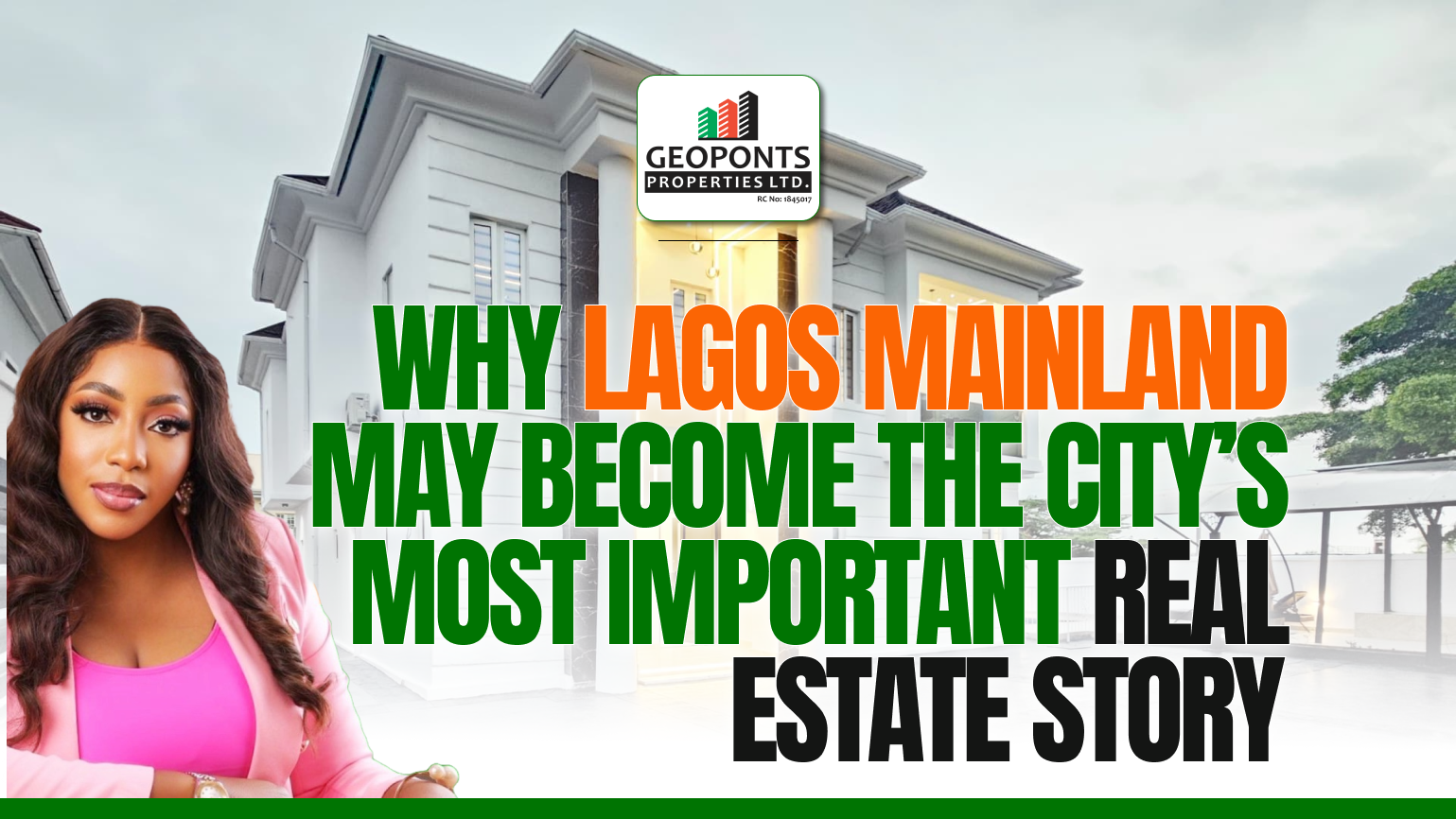
For decades, the conversation around premium real estate in Lagos has largely centered around the Island. Meanwhile, much of the Mainland was often viewed primarily as a densely populated residential and commercial extension of the city rather than a frontier for premium redevelopment. That narrative is slowly beginning to change.
Across the real estate industry, developers, investors, and urban planning stakeholders are increasingly turning their attention toward Lagos Mainland as one of the city’s biggest untapped opportunities. Recent industry discussions and redevelopment conversations have highlighted a growing belief that the future of Lagos real estate growth may depend heavily on how successfully the Mainland evolves over the next decade.
The reason is simple, pressure. Lagos continues to experience aggressive population growth, urban migration, and rising demand for housing and commercial infrastructure. The Island, while still highly valuable, is gradually facing limitations tied to land scarcity, rising acquisition costs, congestion, and premium entry barriers. As prices continue climbing in traditional luxury districts, attention is naturally shifting toward areas where redevelopment potential remains significant.
Many Mainland districts already possess one critical advantage that newer development corridors are still trying to build, established urban structure. Areas such as Yaba, Surulere, Ikeja, Maryland, and parts of Ebute Metta already benefit from existing road networks, commercial activity, educational institutions, transportation access, and dense population centers. What these areas increasingly need is modernization, redevelopment, and strategic urban renewal.
Industry experts have argued that redevelopment across Lagos Mainland could unlock enormous economic and real estate value if approached correctly. Older residential properties, aging commercial buildings, underutilized plots, and outdated infrastructure present opportunities for transformation into mixed use developments, modern residential projects, commercial hubs, and higher density housing solutions that better reflect the realities of modern Lagos.
Yaba remains one of the clearest examples of what this transformation could look like. Once known primarily as an educational and residential district, the area has evolved into a growing technology and innovation hub. As startups, businesses, and young professionals continue moving into the district, property demand and redevelopment activity have steadily increased. Similar patterns are beginning to emerge in other parts of the Mainland as investors recognize the long term potential of strategically located urban communities.
Another major factor driving interest in Mainland redevelopment is affordability relative to the Island. While premium locations on the Island continue commanding extremely high prices, parts of the Mainland still offer comparatively accessible acquisition opportunities for developers and investors. This creates room for stronger appreciation potential, especially as infrastructure improvements and urban renewal projects continue to reshape these communities.
Importantly, the redevelopment conversation is not about luxury housing. Lagos’ growing population has intensified pressure on housing availability across income levels. Stakeholders increasingly believe that strategic redevelopment could help address part of the city’s housing deficit by creating more efficient use of existing urban space. Rather than continuously expanding outward alone, Lagos may increasingly need to rebuild inward, replacing outdated low density structures with modern developments capable of accommodating the realities of a growing megacity.
Transportation infrastructure also plays a major role in this shift. Rail projects, road expansions, and evolving transport networks are gradually improving connectivity between different parts of Lagos. As commuting patterns evolve, areas previously overlooked by premium investors may become significantly more attractive due to improved accessibility and commercial viability.
For investors, this creates an important strategic question, where will the next wave of value creation happen?
Historically, some of Lagos’ biggest real estate gains came from investors who recognized future growth corridors before the broader market fully caught on. Today, many industry observers believe parts of the Mainland may represent a similar opportunity, particularly for long term investors focused on redevelopment aligned communities and infrastructure supported growth.
However, redevelopment markets also require careful navigation. Not every location will evolve at the same pace, and not every project will succeed. Factors such as title verification, zoning regulations, infrastructure planning, neighborhood demographics, and development quality all matter significantly when evaluating opportunities.
This is why professional guidance has become increasingly important within Lagos’ evolving market landscape.
At Geoponts Properties Ltd., we help clients identify strategic real estate opportunities positioned for long term growth and value appreciation. Whether you are searching for investment opportunities on the Mainland, exploring redevelopment aligned properties, or looking for residential and commercial assets in emerging urban corridors, our team is committed to helping you make informed and confident decisions.
The future of Lagos real estate may not only belong to the Island anymore. Reach out to Geoponts Properties today and let us help you position yourself where the next wave of opportunity is already beginning to rise.